Card games have survived for generations because the rules are easy to return to and the decisions are never quite the same twice. Playing online should preserve that feeling. You should be able to open a table, understand what is happening, and play a real hand without arranging a group or creating an account first.
That is why we built Trick Card Games: a home for classic trick-taking games that puts the actual game first. It is a long-term project, beginning with Spades and expanding one carefully built game at a time.
The gap we wanted to close
There are already good places to play cards online. A large library such as CardGames.io offers the convenience of many familiar games in one place. Trickster Cards is built around playing with other people and the social side of a card table. Those are real strengths, and we are not trying to pretend they are missing.
Our focus is different. We want a solo-first experience for someone who has ten minutes, wants to practice a decision, or simply prefers playing at their own pace. The table should be ready when they are. Rules and strategy should be close to the game, not hidden in a separate help maze.
That focus also means being clear about what is available. Today, Spades is the playable game on Trick Card Games. Hearts, Euchre, and Bridge are future ambitions, not games we claim you can play here now.
What a modern card-game experience means to us
Modern does not mean adding animation to every click. It means removing friction at the moments that matter:
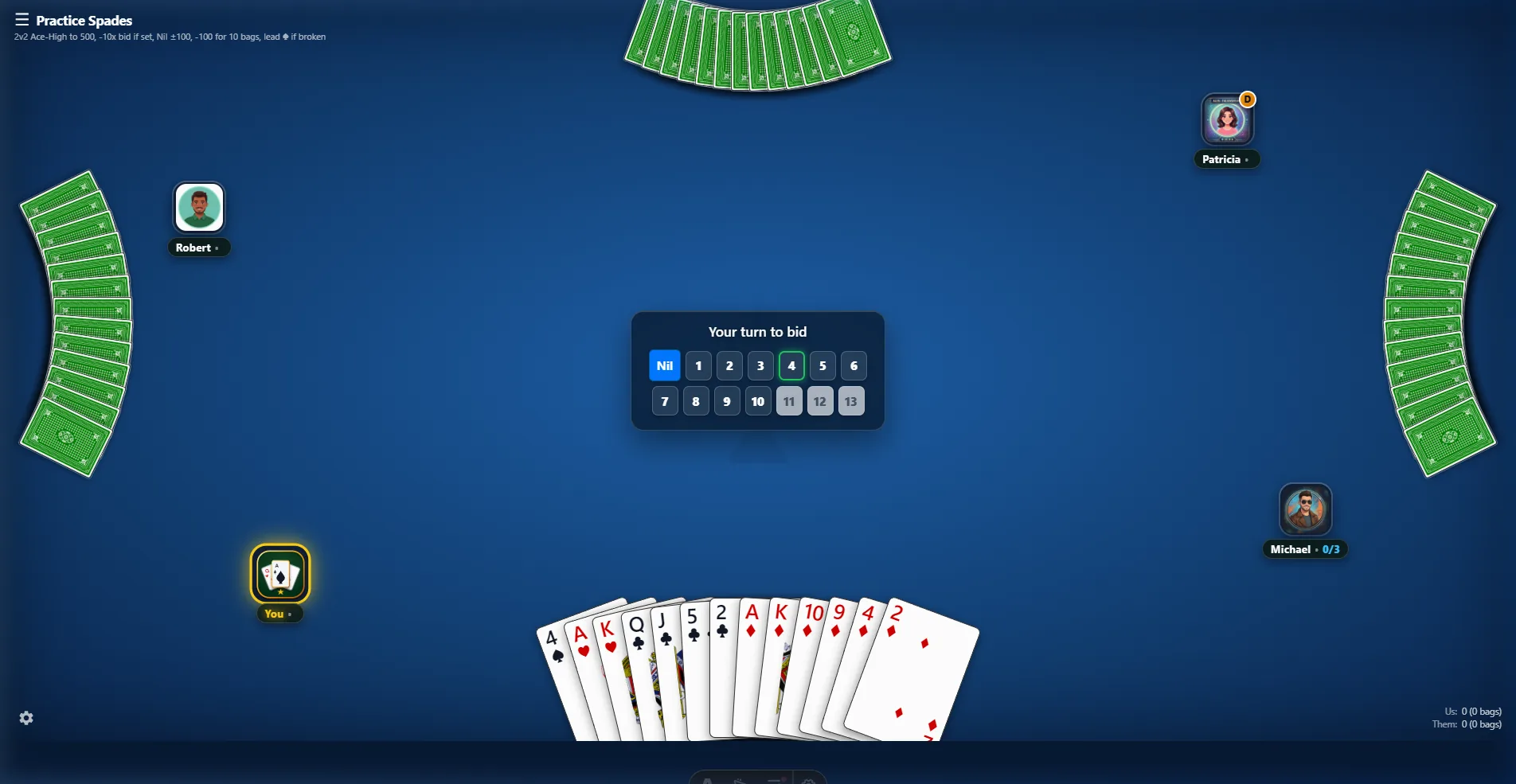
- Start without a lobby or sign-up. Open Spades in your browser and play against AI opponents. There is no need to wait for a table to fill.
- Use the screen you have. The table works on desktop and mobile, with a full-screen option when you want the game to take over the display.
- Keep useful choices within reach. Switch between light and dark themes, adjust table and card settings, and choose the scoring options that fit your game.
- Learn while you play. The Spades rules sit below the table, and our guides go deeper into bidding, Nil, and 2-player drafting.
- Keep progress on your device. Game preferences, career stats, achievements, and daily goals use local browser storage; they do not require an account.
Why Spades came first
Spades is a good test of whether a card-game platform respects the game itself. A clean table is not enough: bidding, Nil, bags, following suit, and breaking Spades all have to behave correctly. The AI also has to make the game worth replaying, even though no computer partner will always choose the move a human teammate would.
We started with two ways to play. In 4-player partnership, you team up with an AI partner against two AI opponents. In 2-player duel, you build a hand through a draw-and-discard draft before bidding and playing 13 tricks head-to-head. These modes share a home but make different decisions interesting.
The goal is depth before breadth. A game earns its place on Trick Card Games when it is enjoyable to return to, not merely when its name can be added to a menu.
Where we go from here
Trick Card Games is not a finished card-game collection. We plan to add more trick-taking games over time, while continuing to improve the feel, rules, AI, and learning tools of the games already here. We are not announcing release dates for games that are still in development.
For now, the best way to understand the idea is to play a round of Spades, or try the 2-player draft. The experience should make the case for the platform more clearly than a promise can.